
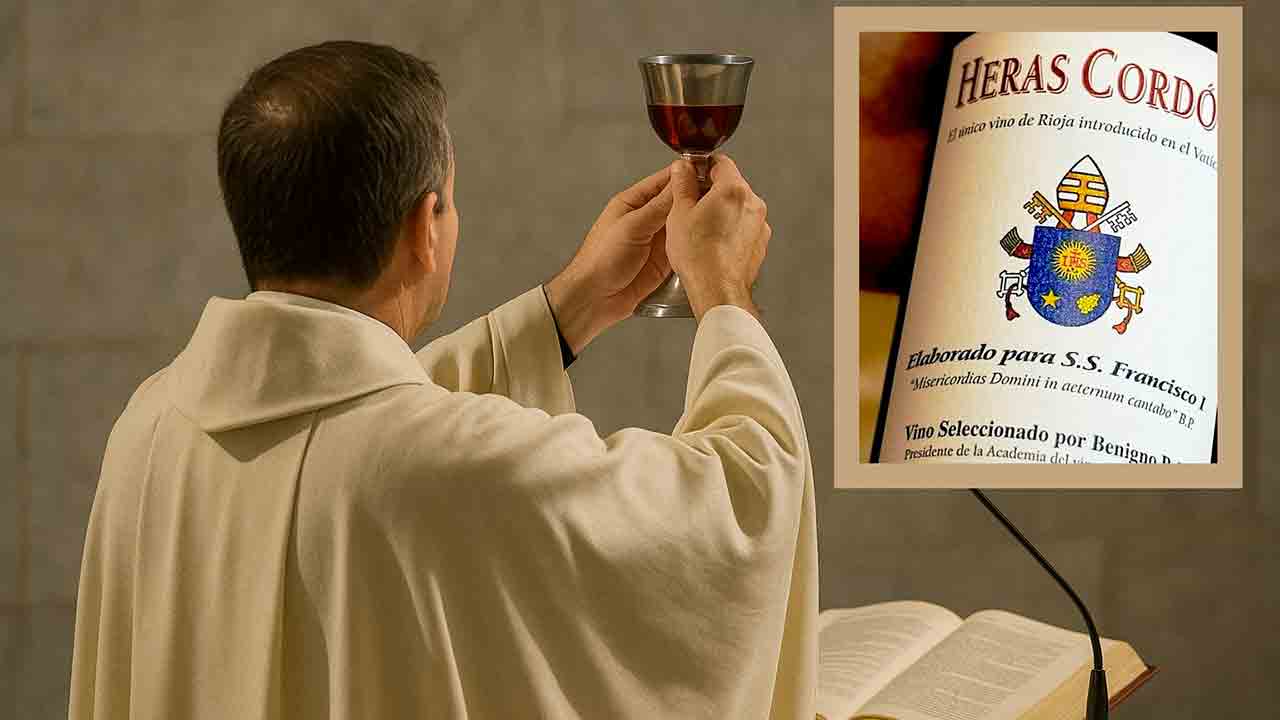
Few beverages carry as much symbolism as mass wine, the same sacred drink that is consecrated on the altars of the Vatican and has been tasted by popes for centuries.
Much more than an ordinary wine, it represents a deep connection between the divine and the human — and yes, it has a controlled origin, strict rules, and even wineries with the Vatican’s exclusive seal.
In this article, you will discover what mass wine is, how it is produced, which wine the popes actually drink, and how the tradition remains alive through labels such as the Heras Cordón winery, from the prestigious Rioja region in Spain.
What is mass wine?
Mass wine is the wine used in the celebration of the Eucharist — the moment when, according to Catholic faith, the bread and wine are transformed into the body and blood of Christ. For this, it must be pure, natural, and liturgically approved.
Unlike conventional wines, mass wine:
- Must be made only from grapes, with no chemical additives;
- Can be red or white, but red is the most traditional;
- Must have a pleasant taste, not oxidized or vinegary;
- Is produced under rules defined by the Catholic Church’s Liturgical Directory.
Vatican: tradition and refinement in every chalice
In the Vatican, wine is not just a spiritual symbol, but also an expression of tradition, quality, and history. Every mass, whether in discreet chapels or the grand St. Peter’s Basilica, uses wines specially produced for sacred rituals.
The wine consecrated by the pope at each Eucharist is not chosen at random. Wineries with monastic or family traditions, or special certifications, are selected to provide these labels — with one name standing out across borders.
Heras Cordón: the Spanish wine approved by the Vatican
Among the wineries that supply mass wine to the Vatican, Heras Cordón, located in the famous Rioja region in Spain, holds a place of distinction.
With over two decades of partnership with the Vatican, the winery produces an exclusive wine for liturgical use, with the Vatican’s official seal certifying compliance with ecclesiastical norms.
This wine, beyond its liturgical purpose, is a true example of Spanish winemaking tradition. With notes of ripe fruit, a light touch of oak, and smooth tannins, it offers an elegant, spiritual, and enologically rich sensory experience.
The partnership between Heras Cordón and the Vatican reinforces the value of mass wine — not only as a religious symbol but also as a cultural and sensory heritage.
Does the Pope really drink wine?
Yes, and it’s no secret. During mass, the pope consumes the consecrated wine as part of the ritual. In addition, many pontiffs also enjoy the drink in private moments. Some, like John Paul II, preferred sweet wines; Benedict XVI valued discreet German labels. Pope Leo XIV, a Virgo, is described as someone with simple and refined taste, aligned with the classic and symbolic style of traditional mass wine.
Wine, spirituality, and lifestyle
Beyond the altar, mass wine inspires a lifestyle that values tradition, connection with nature, and conscious consumption. In times when people seek authentic experiences, liturgical wine offers something rare: the taste of faith, bottled with history and meaning.
More than just a beverage, mass wine is a spiritual, cultural, and sensory experience. Whether on the altars of the Vatican or in the glass of those seeking a connection with the sacred, it represents the meeting of faith and tradition — with flavor and soul. And thanks to wineries like Heras Cordón, this legacy lives on, one harvest at a time.
This content was created with the help of AI and reviewed by the editorial team.
